Resilience
The Sons We Don't Talk About: Growing Up in the Shadow of Domestic Violence and Suicide
When domestic violence and suicide shatter a family, what happens to the sons left behind? The loss of a father, the search for answers, and the complicated bond between a mother and her sons can leave wounds that extend well into adulthood. This deeply personal reflection explores grief, resilience, and the challenge of breaking generational cycles of trauma.

When a father destroys the family he was supposed to protect, what happens to the sons left behind?
We talk about the women who survive domestic violence. We talk about the daughters who witness it. We talk about breaking generational cycles of abuse.
But what about the sons?
What happens to little boys who lose their father not to illness or an accident, but to an act of violence against their own mother, followed by suicide?
Who teaches those boys what it means to be a man? Who helps them reconcile loving a father who committed an unforgivable act? And what happens to the relationship between a mother and her sons when everyone is trying to survive the same tragedy, but experiencing it in profoundly different ways?
These are questions I have lived with for more than sixteen years.
On February 27, 2010, my husband of nearly 22 years attempted to murder me. He shot me three times before taking his own life.
Our three sons were 9, 14, and 16 years old.
In a single day, they lost their father, nearly lost their mother, and lost the family they had always known.
I survived. But survival was only the beginning.
01
Three Boys. Three Different Childhoods. One Unimaginable Trauma.
At nine years old, a boy is still very much a child. His world revolves around family, security, routine, and the belief that his parents will always be there to protect him.
At fourteen, a boy is navigating adolescence, identity, independence, and the complicated emotions that accompany becoming a young man.
At sixteen, he is standing at the threshold of adulthood, developing his understanding of relationships, responsibility, masculinity, and his place in the world.
My sons were at three distinctly different developmental stages when their world collapsed.
And while they experienced the same family tragedy, they did not experience the same trauma.
One might have needed reassurance. Another might have needed answers. Another might have needed distance.
Grief doesn't follow a predictable path, particularly in children. Some withdraw. Some become angry. Some appear remarkably resilient. Others struggle years later, long after the world assumes they have moved on.
And sometimes the child who appears to be doing the best is simply the one who has become most skilled at hiding his pain.
As their mother, I wanted desperately to make everything better.
But how do you repair a childhood when you are struggling to rebuild your own life?
02
When the Father Is Both Loved and Feared
One of the most complicated aspects of losing a parent to murder-suicide or attempted murder-suicide is the emotional contradiction it creates.
Children are supposed to love their parents.
But what happens when the father they loved is also the person who tried to kill their mother?
Can they grieve him without feeling disloyal to her?
Can they remember the good moments without minimizing the violence?
Can they be angry with him and still miss him?
The answer to all three questions is yes.
And I believe we need to give children permission to hold these conflicting emotions without shame.
My sons lost their father. Regardless of what he did to me, he was still their dad.
That relationship belonged to them, and their grief was theirs to experience.
I have had to recognize that my experience of their father and their experience of him are not identical.
I survived his violence. They survived his absence.
Both experiences are real. Both carry consequences.
A child should never have to choose between loving the parent who died and protecting the parent who survived
03
When the Search for Answers Sounds Like Blame
One of the most complicated dynamics between a surviving mother and her children is the difference between blame and the desperate search for an explanation.
Children need to make sense of their world. They want to believe that the people they love are safe, that parents make good decisions, and that terrible things can somehow be prevented.
When domestic violence shatters those beliefs, children are left with questions that may follow them well into adulthood.
Why didn't someone see this coming?
Why didn't Mom leave?
Why did she choose him?
Could something have been done differently?
To a child, these questions may represent an attempt to understand how the unthinkable happened. If there was a decision that could have changed the outcome, perhaps the world is not quite as unpredictable or frightening as it suddenly seems.
But to a mother who has survived violence, those same questions can sound remarkably like blame.
And that is where the relationship becomes complicated.
The mother may hear an accusation where the child is searching for an explanation. The child may hear defensiveness where the mother is struggling with her own pain, guilt, and unanswered questions.
Neither may fully understand what the other is experiencing.
For the surviving mother, there is often an additional emotional burden. She may have spent years questioning her own decisions, replaying events, wondering whether she missed warning signs or could have changed the outcome.
When those same questions come from her children, they can reopen wounds she has worked desperately to heal.
Yet the child's need to understand is legitimate, even when the questions are painful.
And the mother's need to be understood is equally legitimate.
A child's need for answers does not make the mother responsible for the violence. And a mother's pain does not make the child's questions wrong.
Both deserve compassion.
The challenge is learning to have those conversations without assigning responsibility for the abuser's choices to the person who survived them.
A mother can acknowledge her children's grief, anger, and disappointment without accepting blame for another person's actions.
A child can question the past without diminishing the courage it took for a parent to survive.
Perhaps healing begins when both recognize that they are not standing on opposite sides of the tragedy.
They are standing in different places within the same loss.
And sometimes, what sounds like blame is really a child asking a much more vulnerable question:
How could something so terrible happen to our family, and how can I be certain it won't happen again?
04
The Silent Risk: When Suicide Becomes Part of a Family's History
There is another reality that families affected by parental suicide must confront.
Research consistently demonstrates that children who lose a parent to suicide face an elevated risk of suicidal behavior themselves.
A 2022 systematic review and meta-analysis of 20 studies found that, compared with children whose parents were both living, those who lost a parent to suicide had approximately three times the relative risk of dying by suicide and 1.76 times the relative risk of attempting suicide.
Those numbers are sobering.
They do not mean that children who lose a parent to suicide are destined to follow the same path. The vast majority do not. But they underscore the importance of recognizing that parental suicide can create vulnerabilities extending well beyond childhood.
The risk can be influenced by grief, trauma, mental health challenges, family history, and the loss of stability and support.
For boys, the challenge may be compounded by cultural expectations surrounding masculinity.
Be strong. Don't cry. Toughen up. Move on.
We teach boys to be resilient, but too often we confuse resilience with emotional silence.
Anger may feel more acceptable than sadness. Withdrawal may feel safer than vulnerability. Independence may become a defense against the possibility of another devastating loss.
We need to create environments where boys and men can talk about pain without feeling weak, seek professional help without shame, and understand that their father's choices do not define their future.
A father's suicide may become part of his son's story. It does not have to become his son's destiny.
05
The Complicated Relationship Between a Mother and Her Sons
Perhaps the most difficult subject to discuss is what happens to the mother-son relationship in the aftermath.
I was not simply a mother raising three boys.
I was a mother recovering from an attempted murder, navigating grief, financial devastation, and the enormous responsibility of rebuilding a family.
I had to become the stable parent when my own sense of stability had been shattered.
I had to provide reassurance when I was frightened.
I had to establish boundaries when I was exhausted.
I had to be both nurturing and strong, often without the emotional or financial resources I once believed I could count on.
And I had to accept something that remains difficult for any mother:
Loving your children fiercely does not mean you can protect them from every consequence of their trauma.
In some families, sons become fiercely protective of their mothers. They assume responsibilities far beyond their years, believing they must become the man of the house.
In others, anger and resentment can emerge.
A son may direct frustration toward the surviving parent because she is the one who remains. She is present, accessible, and safe enough to receive emotions that cannot be expressed to the parent who is gone.
That does not make the behavior acceptable. But understanding what may lie beneath it can help us respond with compassion rather than simply reacting to conflict.
And sometimes, as children become adults, the relationship grows even more complicated.
The mother who spent years protecting her sons must learn when to step back.
The sons must learn that independence includes accountability.
The family must navigate the difference between supporting someone through trauma and shielding them from the consequences of their choices.
There is a delicate balance between empathy and enabling, between understanding and excusing, between loving someone and allowing a relationship to become unhealthy.
I continue to learn that lesson.
Trauma may help explain certain behaviors, but it does not eliminate personal responsibility.
And being a survivor does not mean I am required to sacrifice my own emotional well-being indefinitely.
06
Who Teaches a Boy to Become a Good Man?
Fatherlessness is not inherently a prescription for dysfunction. Many boys grow into compassionate, responsible, emotionally healthy men without a father in their lives.
But the absence of a father under traumatic circumstances creates unique questions.
Who models healthy masculinity?
Who demonstrates that strength and kindness can coexist?
Who teaches that anger is an emotion, not permission to hurt another person?
Who shows a boy that love is built on respect, accountability, and emotional safety?
Mothers can teach these lessons. So can grandfathers, uncles, coaches, teachers, mentors, and other trusted adults.
The presence of positive male role models can be especially meaningful, not because a mother is inadequate, but because children benefit from seeing different examples of healthy adulthood.
Boys need to understand that masculinity is not defined by control, intimidation, dominance, or emotional detachment.
True strength includes self-awareness.
It includes asking for help.
It includes taking responsibility for mistakes.
And it includes treating women, particularly the women closest to them, with dignity and respect.
Perhaps most importantly, sons need to know that they are not their fathers.
They carry their own identities, choices, and possibilities.
07
When the Children Become Adults, the Trauma Doesn't Disappear
There is a misconception that once children grow up, the effects of childhood trauma somehow disappear.
But turning eighteen does not erase what happened at nine, fourteen, or sixteen.
The experiences we carry from childhood can influence our adult relationships, our ability to trust, our responses to conflict, and our understanding of love and security.
Sometimes those effects are obvious.
Sometimes they are subtle.
Sometimes they emerge decades later.
And sometimes we never know exactly which behaviors are connected to trauma and which are simply part of the complexities of being human.
As a mother, I have had to resist the temptation to explain every difficulty through the lens of what happened to our family.
My sons are not defined solely by their childhood tragedy.
They are adults with individual personalities, strengths, shortcomings, and responsibilities.
I can acknowledge what they endured without assuming that trauma explains every decision they make.
I can love them unconditionally while maintaining boundaries.
I can support their healing without doing the work for them.
And I can recognize that my own healing matters, too.
**The goal is not to spend a lifetime compensating for what happened. The goal is to build a life that is no longer controlled by it.**
08
Breaking the Cycle Means Healing the Sons, Too
When we discuss domestic violence prevention, much of the conversation focuses on helping women recognize abuse, escape dangerous relationships, and rebuild their lives.
That work is essential.
But if we want to break generational cycles of violence, we must also pay attention to the boys growing up in these families.
Not because they are destined to become abusers. They are not.
But because they deserve the opportunity to develop healthy emotional lives, meaningful relationships, and identities independent of the violence they experienced.
They deserve access to counseling, mentorship, support, and honest conversations about what happened.
They deserve permission to grieve.
They deserve to love the parent they lost without defending that parent's actions.
And they deserve to understand that seeking help is an act of courage, not weakness.
As parents, we must also recognize that healing may require boundaries, difficult conversations, and expectations of personal accountability.
Compassion and accountability are not mutually exclusive.
They are both essential components of healthy relationships.
09
A Mother's Love, and the Limits of What Love Can Fix
Sixteen years ago, I nearly lost my life.
My sons lost their father.
We lost the family we knew.
I have spent the years since rebuilding, growing, learning, and trying to create a life filled with purpose, love, and opportunity.
I have made mistakes along the way. I have questioned decisions. I have wondered whether I did enough, whether I could have done something differently, and whether the trauma my children experienced will always influence their lives.
Those are questions many surviving parents carry.
But I have also come to understand that motherhood is not measured by our ability to prevent every hardship or repair every wound.
Sometimes motherhood means standing beside our children.
Sometimes it means stepping back.
Sometimes it means offering compassion.
And sometimes it means establishing boundaries that are necessary for everyone to grow.
My sons' stories are still being written. So is mine.
I cannot change what their father did.
I cannot give them back the childhood they lost.
And I cannot make every choice for the men they have become.
What I can do is continue to love them, encourage healing, model resilience, and believe in their capacity to build lives that are not defined by the worst day of ours.
Because breaking the cycle of domestic violence is not simply about surviving what happened.
It is about ensuring that the pain of one generation does not become the inheritance of the next.
Our sons deserve more than survival. They deserve the freedom to become men whose lives are defined not by the violence they witnessed, but by the love, character, and choices they make in its aftermath.
About Stephanie
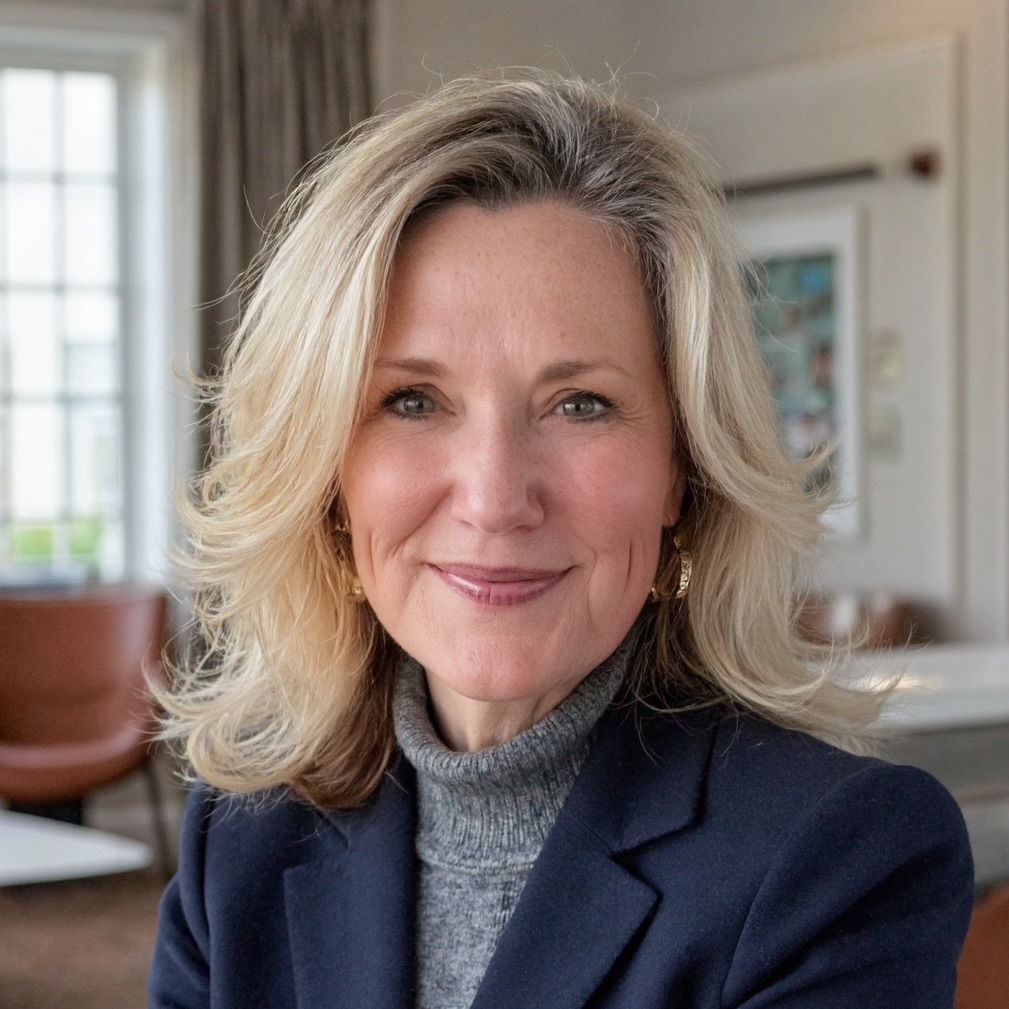
Stephanie J. Bond
CPA, keynote speaker, survivor-leader, and advocate. She writes here between engagements about resilience, financial recovery, leadership, and faith.
Learn About StephanieContinue the Journey