Resilience
Mom, Why Did You Stay?
“When we hide our mistakes behind shame, our daughters inherit only the mystery. When we talk honestly about what happened and what we learned, they inherit wisdom.” Domestic violence leaves a lasting imprint on both mothers and daughters, shaping how they see love, trust, and their own worth; but, what happens when the daughter begins to question the very choices her mother made to survive?
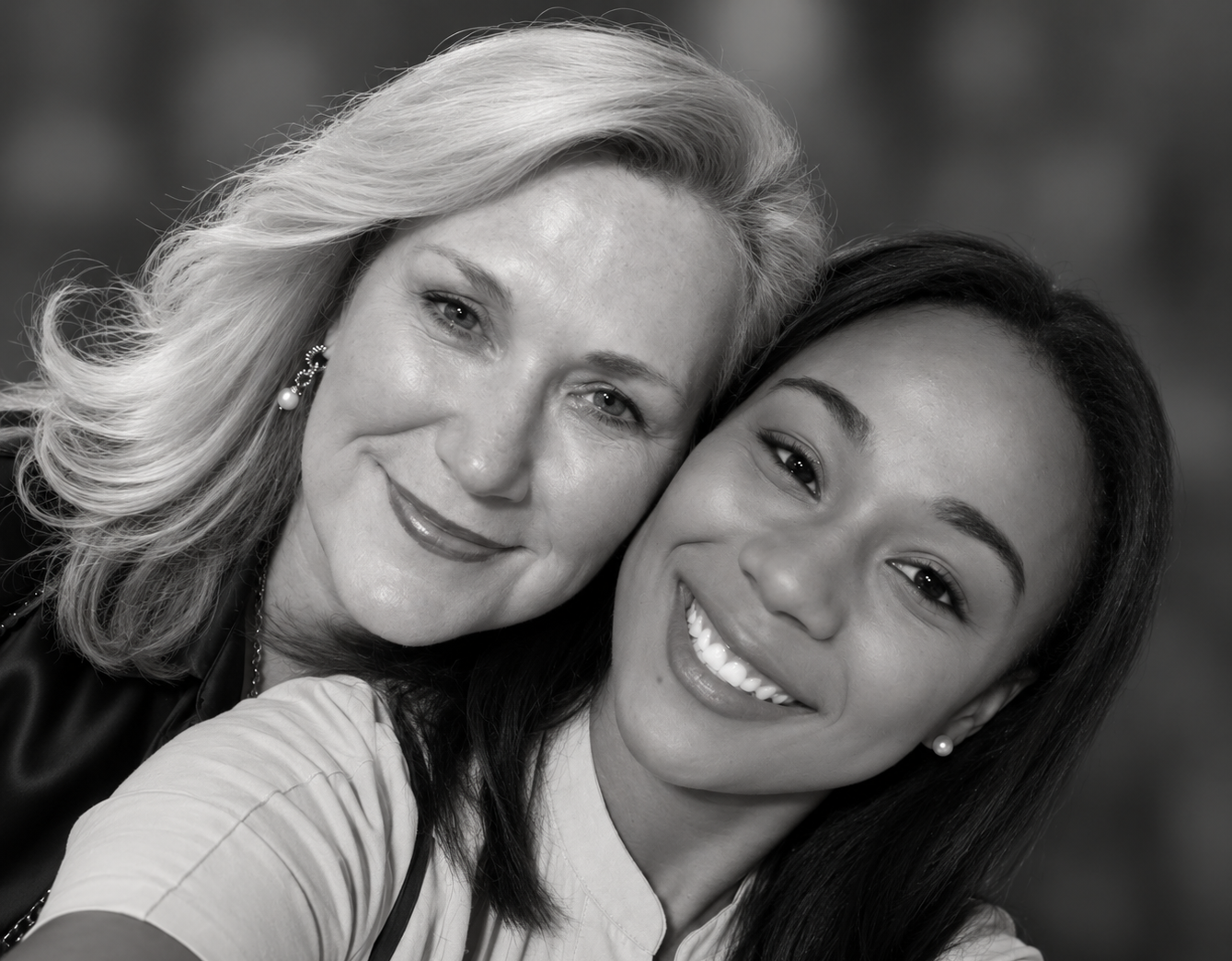
There is a particular kind of heartbreak that comes with being a mother in an unhealthy or abusive relationship. It isn't only the pain of what is happening to you. It is knowing that your daughter is watching.
Mothers spend years trying to protect their daughters from scraped knees, broken hearts, cruel friends, disappointment and danger. We teach them to know their worth. We tell them not to settle. We tell them that love should feel safe.
And then sometimes we find ourselves living a life that contradicts everything we are trying to teach them. That contradiction can carry enormous shame.
--- The Question a Mother Asks Herself ---
"What am I teaching my daughter by staying?" It is an understandable question. But it is also far more complicated than it appears.
Leaving an abusive relationship is rarely as simple as recognizing that something is wrong and walking out the door. There may be financial dependence, children, threats, fear, isolation, religious or cultural pressures, damaged self-confidence, hope that the person will change, or very real concerns about what will happen when the relationship ends.
A woman can be intelligent, accomplished, capable and fiercely protective of her children and still become trapped in an abusive relationship.
Yet mothers can judge themselves mercilessly. We may wonder how we chose this person. We may be embarrassed that our daughters saw us tolerate behavior we would never want them to tolerate. We may fear that we failed to model the strength we spent years trying to instill in them. And perhaps most painfully, we may worry that our daughters are disappointed in us.
--- What the Daughter Sees ---
But daughters are carrying their own complicated emotions. A daughter may love her mother deeply and still feel angry with her.
She may wonder: "Why doesn't she leave?" "Why does she keep believing him?" "Why did she choose him?" "Why does she keep going back?"
Sometimes that frustration becomes judgment. What a daughter may not yet understand is that she is looking at the relationship from outside the system. Her mother is trying to survive from inside it. That distinction matters.
A daughter may also become protective of her mother far earlier than she should have to. She watches moods. She notices tension. She learns when something feels wrong. Sometimes the traditional roles quietly reverse.
The daughter begins checking on Mom. She becomes the defender, the confidante or the emotional protector. And underneath all of that may be another fear she doesn't know how to articulate: "What if this happens to me?"
--- When Your Mother's Relationship Changes the Way You See Love ---
Watching an unhealthy relationship can profoundly influence how a daughter approaches her own. Some daughters may become determined never to repeat what they witnessed. That determination can be powerful. But it can also create fear.
She may scrutinize potential partners looking for warning signs. She may question whether she can trust her own judgment. She may wonder whether genuinely good partners exist. She may become fiercely independent because independence feels safer than vulnerability. And somewhere inside may live the question:
"If my mother, someone I love, respect and admire could choose the wrong person, how do I know I won't?" There is no easy answer to that question.
But there is an important one:
Your mother's relationship does not have to become your relationship. Patterns can be learned. They can also be unlearned.
--- Maybe Being a Good Mother Doesn't Mean Getting Everything Right ---
We sometimes imagine that setting a good example for our children means never making the wrong decision. I don't believe that anymore. Perhaps one of the greatest examples we can give our daughters is showing them what it looks like to recognize something is wrong, reclaim ourselves and build again.
Our daughters don't need mothers with perfect histories. They need mothers willing to tell the truth.
They need to hear: This wasn't healthy. I deserved better. You deserve better.
There were things I didn't understand then that I understand now. And I am still learning.
That conversation can be uncomfortable. It can also be transformative. Because when we hide our mistakes behind shame, our daughters inherit only the mystery. When we talk honestly about what happened and what we learned, they inherit wisdom.
--- Mothers Protect Daughters. Sometimes Daughters Protect Mothers ---
There is something extraordinary about the mother-daughter relationship after adversity. The instinct to protect can flow both directions.
A mother may desperately want her daughter to have a healthier love story than she did. A daughter may desperately want to make sure no one ever hurts her mother again.
Both instincts come from love. But healing may require each woman to release a responsibility that was never hers.
A daughter cannot save her mother. A mother cannot guarantee that her daughter will never experience heartbreak.
What they can do is create a relationship where truth is safe. Where concerns can be spoken. Where boundaries are respected. Where love does not require silence. Where neither woman has to pretend.
--- The Legacy Doesn't Have to Be the Abuse ---
This may be the most important thing I have learned: Our children don't only learn from what happened to us. They learn from what we do afterward. They watch us rebuild. They watch us establish boundaries. They watch us become financially independent. They watch us rediscover friendships, careers, dreams and identities that may have disappeared inside a relationship. They watch us learn that being alone is not the same thing as being unloved. And perhaps most importantly, they watch us raise our standards for what love should look like.
That matters. Because the legacy of domestic violence does not have to be another generation of domestic violence.
The legacy can be discernment. It can be independence. It can be boundaries. It can be courage.
It can be a mother saying to her daughter, "I want better for you than I accepted for myself."
And a daughter eventually being able to answer, "Mom, I don't judge you for what happened. I understand more now than I did then."
Maybe neither woman reaches that place perfectly. Maybe there is still anger. Maybe there are questions. Maybe there are things that hurt to remember.
That's okay. Healing doesn't require rewriting the past. It requires refusing to let the past write the future.
--- To the Mothers ---
Your daughter does not need you to convince her that you made every decision correctly. Let her see your humanity. Talk honestly, in age-appropriate ways, about healthy relationships, boundaries, financial independence and self-worth.
If you are still living with abuse, protecting your children includes seeking support and developing a safe plan rather than carrying the burden alone.
And if you are rebuilding, let your daughter see that too. Let her see that a woman's life is not over because a relationship failed.
--- And to the Daughters ---
Your mother's choices may frustrate you. You may see things she cannot yet see. You may desperately want her to leave, heal or choose differently.
Love her. Tell her the truth when it is safe to do so. But remember that you cannot live her life for her. And you do not have to spend your own life protecting her from every possible hurt.
You are allowed to build your own life. You are allowed to trust carefully. You are allowed to love. And you are allowed to believe that your story can be different.
--- Perhaps That Is How Cycles Are Really Broken ---
Not by pretending the previous generation got everything right.
But by talking about what went wrong. By replacing secrecy with conversation. By replacing shame with understanding. By replacing dependence with agency. By teaching our daughters that strength isn't never making a mistake.
Sometimes strength is looking at the life you have built and saying: "This is not the life I want anymore." And then having the courage to build another one.
Maybe the greatest gift a mother can give her daughter isn't a perfect example of love. Maybe it is showing her that when love becomes harmful, she is allowed to choose herself.
And maybe the greatest gift a daughter can eventually give her mother is understanding that the woman she once thought should have known better was doing the best she could with what she understood at the time.
Mother and daughter. Protecting each other. Learning from each other.
And, together, deciding that what happened before them does not have to happen after them. That is how a family history becomes something more than a story of survival.
It becomes a story of change.

About Stephanie
Stephanie J. Bond
CPA, keynote speaker, survivor-leader, and advocate. She writes here between engagements about resilience, financial recovery, leadership, and faith.
Learn About StephanieContinue the Journey